
Why does everyone love Obsession but hate Don’t Worry Darling?
On what happens when audiences decide a film’s quality before they’ve even seen it.

Obsession (2026) has become one of the year’s biggest success stories. Made on a tiny budget by a director who, until recently, was best known for comedy sketches on YouTube, the film has not only grossed far beyond expectations, but has built a passionate online fanbase and earned the kind of critical acclaim most independent horror films only dream about (with a whopping 94% audience AND critic score on Rotten Tomatoes). For a horror film that isn’t a classic, like The Silence of the Lambs, The Thing, or The Shining, this is incredibly rare.
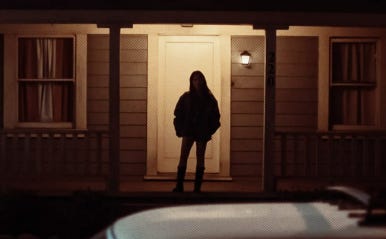
I do think this was completely deserved – Obsession is a great movie, and I loved it. I watched it twice in the cinema within a week (which isn’t odd for me but still). However, one thought I couldn’t shake throughout the entirety of both my watches was: ‘I’ve seen this film before.’ Not literally, of course. Obsession is its own film. It has its own story and its own aesthetic, but as the plot unfolded, all I could think about was Don’t Worry Darling (2022).
Both films are ultimately about toxic relationships built on the removal of female autonomy. In Obsession, Bear becomes so consumed by his desire for Nikki that he wishes for her to love him more than anyone or anything else. This wish strips away her agency. Her discomfort becomes irrelevant to him. When he hears her screaming, or when she snaps back to herself and tries to harm herself to get away from him, or when she asks him to kill her and he replies with, “What’s so bad about being with me?”, we consistently see him actively choose to sacrifice her pain and free will just so he can possess the version of Nikki that he wants. Don’t Worry Darling also revolves around the same theme. Jack knows his relationship with Alice is failing. He knows he is losing her. Rather than accepting that reality, he traps her inside a virtual world where she can play the role of his perfect wife forever. He removes her ability to choose. He decides that possessing her completely is preferable to her leaving him, because he knows he is nothing without her. Both movies are about lonely men being so terrified of losing women that they would rather imprison them than let them leave.
That’s why I was so surprised by how differently the two films were received. Don’t Worry Darling currently sits at a 38% critics score on Rotten Tomatoes. The Critics Consensus reads: “Despite an intriguing array of talent on either side of the camera, Don’t Worry Darling is a mostly muddled rehash of overly familiar themes.” A muddled rehash of familiar themes? Many argued that its commentary on womanhood, misogyny and toxic masculinity was obvious, repetitive, and overly familiar. Yet four years later, Obsession arrives exploring remarkably similar ideas and receives near-universal acclaim. Critics praised its originality. They praised its discussion of consent, body autonomy and gender dynamics. One review that particularly stuck with me states: “It snowballed into a much larger conversation about body autonomy, consent, and pitting women against each other — something I haven’t seen in a movie, let alone a horror movie, facilitate in such a well-crafted way.” I think this stuck with me so much because I thought the complete opposite. I thought that I had seen this in a movie before, 4 years prior.

Part of what has fascinated me most about Obsession’s reception is the number of videos and articles I’ve seen treating its most obvious themes as ground-breaking discoveries. I’ve seen countless “ending explained” posts insisting that Nikki isn’t actually the villain, that Bear is the truly obsessed one, or that the film is secretly about male entitlement and control. But none of this is hidden. The film isn’t burying these ideas beneath layers of symbolism waiting to be excavated by internet detectives. Bear literally removes Nikki’s autonomy for his own benefit. The entire plot is built around his inability to accept her as a person with desires independent from his own. This isn’t subtext. It’s just text.
While Don’t Worry Darling was criticised for being too obvious about its themes, Obsession was praised because people kept rediscovering those same themes and presenting them as profound revelations. And that’s what makes the comparison so fascinating. Because the more I look at these two films, the harder it becomes to understand why one was criticised for recycling familiar ideas while the other was celebrated for reinventing them.
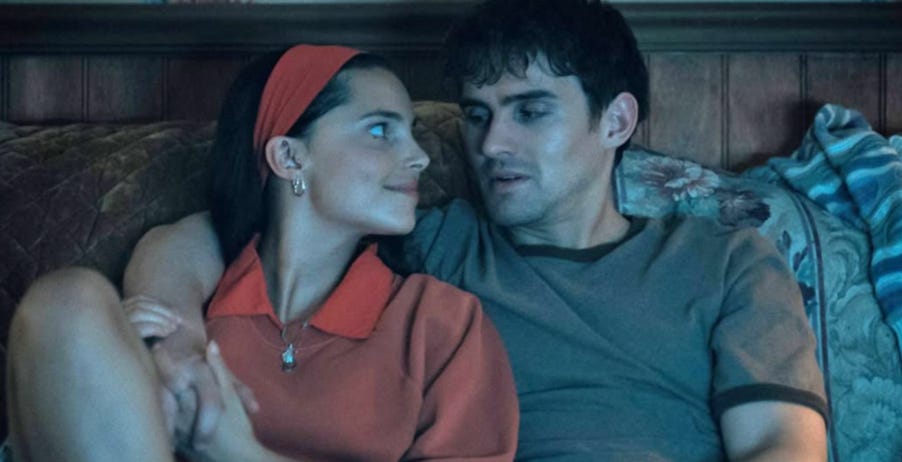
Obviously there are arbitrary differences between the two: Obsession is a horror film while Don’t Worry Darling is a psychological thriller with horror elements. Obsession uses supernatural wishes while Don’t Worry Darling uses virtual reality. But both rely on the same kind of unease. Neither film derives its horror from monsters, demons, or supernatural evil. Instead, both are terrifying because their central fears are entirely human: control, obsession, entitlement, and the possibility of having your autonomy stripped away by someone who claims to love you.
That’s why the praise of Obsession being, ‘completely original’ just doesn’t sit right with me. People have been talking about this topic for years, in Men, The Stepford Wives, The Handmaid’s Tale, even in sitcoms like Kevin Can F**k Himself. Even just last year, Companion - a sci-fi thriller about a man who literally programmed his ideal partner into existence - was released. Like Obsession, it centred on male entitlement and the desire to mould women into something more convenient. It raised many of the same questions about possession, autonomy, and insecurity that these stories have been exploring for decades. Passengers (2016) starring Chris Pratt and Jennifer Lawrence was a romance for the men, but a horror story for the women. If the ‘originality’ praise comes from the use of the One Wish Willow, I would argue that The Victory Project in Don’t Worry Darling is also as original. The concept of the virtual world gave the film the unique framework to operate through just like the use of the One Wish Willow. So why was one embraced while the other was ridiculed?
I think the answer has very little to do with the films themselves. The difference is that Obsession only became popular after people had seen it while Don’t Worry Darling was notorious before anybody even had. Obsession arrived without much baggage. Audiences discovered it through word of mouth once people had actually started to watch it. Its reputation was built almost entirely by reactions to the finished product.
However, long before the release of Don’t Worry Darling, the film had already become an internet event. It was expected and waited for and had gained its aforementioned notoriety from being Olivia Wilde’s second feature film that starred her boyfriend at the time – Harry Styles, a global pop star with very little acting experience who was suddenly appearing alongside some of the most respected actors and actresses of today. Many people walked into Don’t Worry Darling already convinced that it would fail, that the Harry Styles nepotism would shine through and validate the narrative that had already been formed online – that Olivia Wilde was biased, that Harry Styles couldn’t act, that the production was a mess and consequently, that the movie was doomed. Thus, every flaw of the film became proof of that narrative. While I obviously don’t think Harry Styles displayed the best acting in the film, I think the claims that his acting was so bad that it ruined the film are frankly ridiculous. I think his performance was perfectly satisfactory. When anybody is acting opposite Florence Pugh, they’re going to look worse by mere comparison. Nobody was asking whether Harry Styles was convincing enough for the role, but were asking whether he was good enough for Florence Pugh. And, of course, the answer was no.
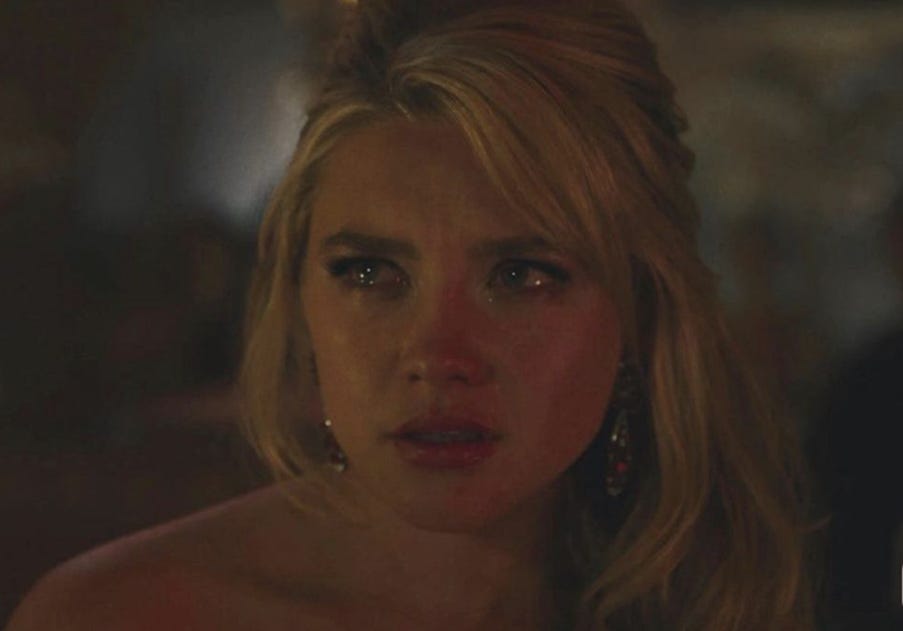
In Obsession, that imbalance didn’t really exist. The performances by the underground leads, Inde Navarrette and Michael Johnston, both operated on roughly the same level. They were both still phenomenal, especially Inde, but because there wasn’t much discrepancy between the two, it allowed the audience to focus on the story rather than constantly evaluating the actors against one another.
The second thing that I think harmed Don’t Worry Darling that actually might have helped Obsession was the timing of their release. Don’t Worry Darling arrived at the height of the “elevated psychological thriller” boom and was constantly compared to films like The Invisible Man, Fresh, and Watcher. Obsession arrived during a horror-renaissance. I think most people will agree with me that horror is arguably more popular than it has been in decades. Obsession entered a landscape eager to embrace inventive, low-budget horror and was allowed to succeed on its own terms while Don’t Worry Darling entered an already saturated market.
There are also instances where I think Don’t Worry Darling is stronger than Obsession, though neither are flawless. For all its faults, Don’t Worry Darling spends considerable time establishing Alice as a human person. We understand her desires, her frustrations, and what has been stolen from her whereas the women in Obsession for me felt much more passive by comparison.
Nikki is placed under male control before we truly get to know her as an individual and Sarah ultimately becomes defined through her relationship and crush on Bear. This is a very minor point as I do think there was attempts to flesh them out with Sarah’s application to art school with a hope of becoming a tattoo artist, and Nikki wanting to quit her job at the music store to focus entirely on her writing career. It is slightly unfair as Don’t Worry Darling follows the perspective of Alice, so it obviously has more opportunity to make her an active character in her own story, and by following Bear in Obsession the girls don’t get quite the same liberty. Which, I guess, is part of the point of the film. But my point is that Obsession was allowed the liberty to make mistakes but every flaw in Don’t Worry Darling was magnified.
I do very much like both movies, and I do think Obsession deserves its success. But every glowing review of Obsession only leaves me wondering what the conversation around Don’t Worry Darling might have looked like if audiences had been allowed to discover it the same way: without the baggage, without the discourse, and without already knowing what they were supposed to think. None of this is to say that people are wrong to dislike Don’t Worry Darling. Plenty of viewers watched it and simply didn’t connect with it, and that’s no problem at all. Sometimes people just don’t like a movie. My problem isn’t that people didn’t like the film, it’s that so many seemed determined to hate it before it had the chance to prove them wrong.
Maybe that’s why this whole conversation frustrates me so much. I try to go into every film as blindly as possible. I rarely watch trailers because they almost always distort my experience. Either they make me expect something incredible and I spend the entire runtime waiting for a film that doesn’t exist, or they convince me a film isn’t worth my time in the first place. A friend of mine skipped Sinners because he thought Michael B Jordan’s accent in the trailer was bad, and thus the film must be bad. He missed out on one of the best horror films of the decade. The same thing happens on a much larger scale online. Before a film is released, audiences consume trailers, casting announcements, interviews, controversies, review scores, think-pieces and TikTok discourse until they’ve practically decided their opinion already. By the time they finally sit down in the cinema, they’re not just watching a movie — they’re looking for evidence that confirms what they already believe. I think the greatest way to enhance your viewing experience of any film, is to give it the chance to surprise you. Go in with no expectations. With no preconceived narrative. With no knowledge of the plot. With no internet consensus telling you what you’re supposed to think. Just you, the screen, and the opportunity to form an opinion that’s actually your own.
I definitely think Obsession sits better with audiences because the concept is pretty simple and delivers what it set out to deliver, and I agree it was the expectations around Don't Worry Darling that triggered its downfall, but the elephant in the room here is rape as a theme.
I think Obsession struck a nerve because it didn't shy away from the obvious implication that this type of violation of bodily autonomy would be rape, whereas Don't Worry Darling handled the implication... awkwardly. The media scandal I remember the most clearly was surrounding the sex scene between Florence Pugh and Harry Styles, specifically around its use in the trailer and in the pr campaign. During a pre-release interview, Olivia Wilde referenced the scene to talk about how the movie centered "female pleasure". It was an odd comment that looked a lot worse in hindsight, but I think this reflected, to me, that the main flaw I had with Don't Worry Darling was that it kinda danced around the idea of rape as a byproduct of its concept. This could also just be downstream of the thriller/horror genre difference, but I do think it contributed to the feeling that Don't Worry Darling avoided the more complex implications of its concept.
Really interesting article! I think this is also why we should herald unknown actors and directors because we don’t have preconceived notions about them yet and therefore can just be the characters